%20copy%202.png)
2025 Wrapped: Reflections and Ambitions
December 16, 2025
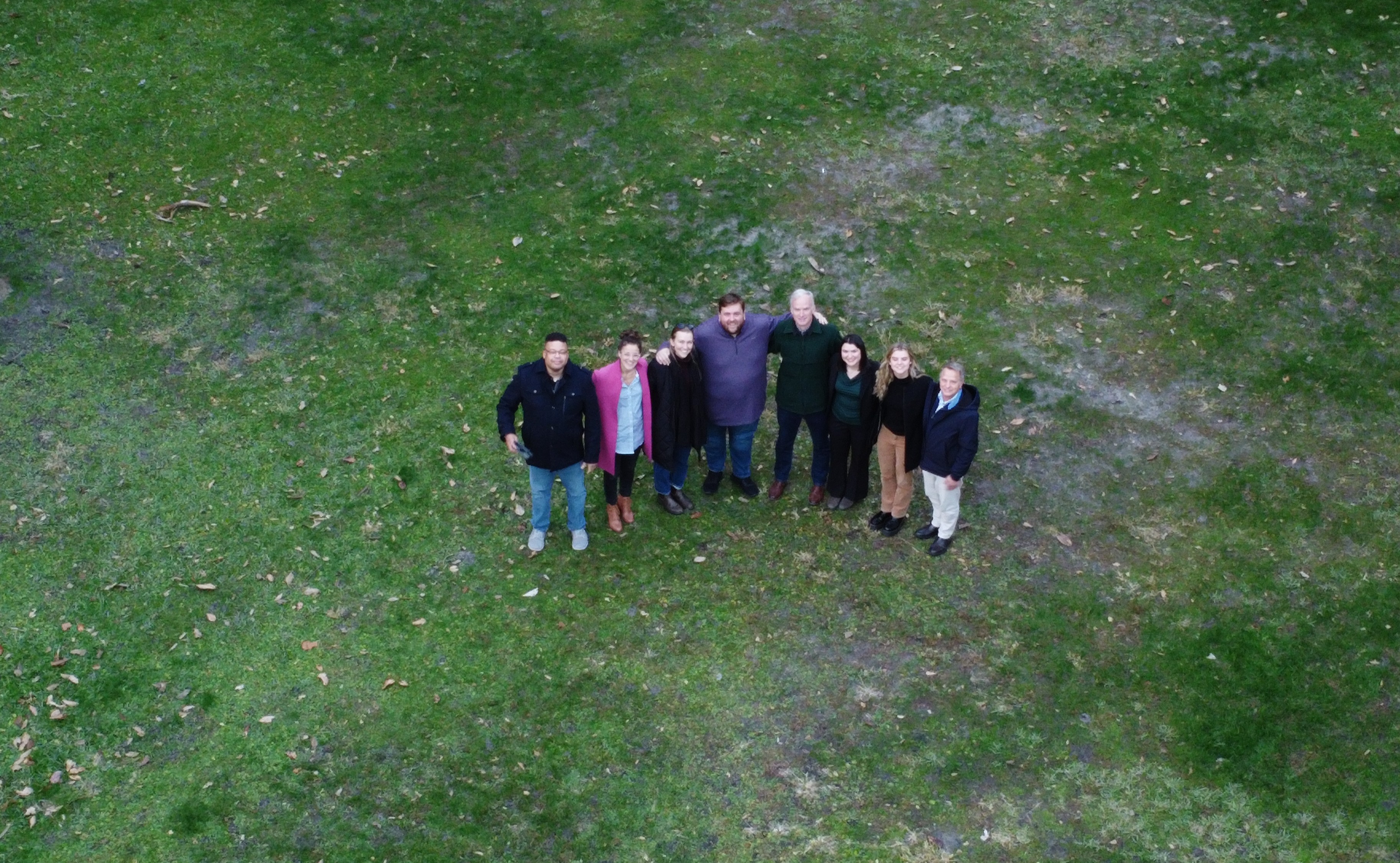
Last week, I had the good fortune of gathering the Vernonburg Group team in Savannah, Georgia, USA, for some reflections and planning. As the new year approaches, we reflect on the past 12 months—how the world has changed, what we accomplished, and what we hope for in 2026. Last year was a significant one for Vernonburg Group, and for governments, companies, non-profits, and other organizations seeking to close the global digital divide.
2025 has been a year of momentous change – politically, economically, and technologically. President Donald J. Trump was inaugurated in January and this ushered in important shifts in both domestic and foreign policy – reinvigorating a technology neutral approach to the Broadband Equity, Access, and Deployment (BEAD) and other programs, strengthening the US government’s focus on commercially-sustainable economic development initiatives, and prioritizing expansion of safe and secure digital infrastructure to power an emerging Artificial Intelligence ecosystem.
Globally, universal high-speed mobile and fixed broadband availability and adoption are now recognized as essential to social and economic participation and increasingly are central to national plans for economic growth and resilience. While each country faces unique challenges, regionally- and globally-harmonized technological and legal and regulatory approaches are helping to accelerate efforts to close the digital divide.
We see increased investments in expanding infrastructure to underserved communities, but these investments are still miniscule compared to the size of the gap that needs closing. Providers are rolling out new business models and technological approaches to provide high-quality internet connectivity in the most affordable way. Fiber to the home connectivity is being deployed deeper into lower-income urban and peri-urban communities, terrestrial fixed wireless technologies are becoming more capable and less costly, and Low Earth Orbit (LEO) satellite constellations hold great promise for extending high-speed, low-latency connectivity to unserved rural communities. Other technologies, such as Free Space Optics (FSO), also promise to strengthen and extend internet infrastructure.
Across our focus areas, Vernonburg Group accomplished extensive work around the world this year:
- Publications: This year, we published a series of papers and blog posts. In September, the International Telecommunication Union released Connecting Humanity Action Blueprint, which was supported by Vernonburg Group. This groundbreaking report lays out a path for achieving the ITU's goal of universal, meaningful internet connectivity worldwide by 2030. In July, we launched the Digital Opportunity Index, the first benchmark of its kind evaluating how 15 US publicly-traded internet service providers (ISPs) are working to close the digital divide. Three ISPs earned a top AAA rating, but no ISP received a perfect score. In June, we published a report, Avoiding the Overbuild Trap, explaining why investing in broadband adoption efforts will deliver more impactful, cost-effective, and commercially-sustainable results than publicly-funded network overbuilds in already-served areas.
- Policy and Strategy: Vernonburg Group continues to advocate for data-driven public policy initiatives. We were the first to highlight the BEAD program’s potential to unleash a Digital Opportunity Dividend that could be used to strengthen broadband infrastructure deployment initiatives while devoting unprecedented resources toward increasing digital adoption and ensuring rural broadband providers’ commercial success. Vernonburg Group issued a series of blogs and filed comments with the National Telecommunications and Information Administration (NTIA) and in every state and territory in the US, urging a technology-neutral approach to the BEAD program. We provided data to help size a “rainy-day fund” for the BEAD program and highlighted the importance of streamlining permitting processes.
- Access to Capital: With US Government support, we launched Connect One Billion, a blended finance entity that supports and accelerates the growth of ISPs in low- and middle-income countries. Connect One Billion aims to provide early-stage, high-potential ISPs with the capacity building and financial support needed to extend secure, affordable, high-speed internet connectivity to one billion people over the next decade. Connect One Billion recently held its first technical assistance workshop with 15 African ISPs and is starting to make its first investments.
- Data Visualization: We updated our free online Digital Opportunity Map and our Broadband Funding Optimization Tool in support of anyone in the US planning and preparing broadband expansion and digital opportunity programs. Building on our work for the ITU, we are working with a major multi-lateral development bank on a first-of-its-kind online tool that estimates and visualizes digital availability and adoption gaps and costs across an entire continent. Stay tuned for more about that project in 2026.
- Economic Development: We are working with several states, counties, and communities on economic development initiatives with a focus on innovative public-private partnerships and approaches to increasing mobile and fixed broadband availability and adoption. This includes significant stakeholder engagement, as well as introduction of innovative business models and technological approaches.
As we look forward to 2026, we will continue to focus on a few key areas. Access to financing for last-mile broadband networks in rural areas and in emerging markets remains a key barrier to broadband availability. Because broadband infrastructure projects will only be successful if people sign up for services, we must ensure that people can afford broadband connectivity and digital services, understand their relevance, and engage productively and safely online. Meaningful broadband adoption must be the ultimate aim of our efforts. Any efforts to deliver universal, meaningful internet connectivity must now account for the role of infrastructure supporting and digital services leveraging Artificial Intelligence capabilities, and this will be a major focus in 2026.
Thank you to our clients for trusting Vernonburg Group to help you close the global digital divide. If you are not a client, but are interested in seeing just how Vernonburg Group can help you close the digital divide in your community, please reach out to me or anyone on our team. We appreciate the opportunity to help.